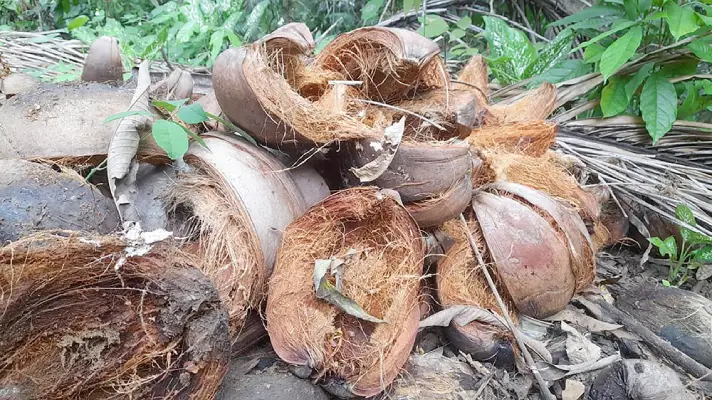
Coconut Husk: From Waste to Green Gold
Admin 12 Agustus 2025 1x
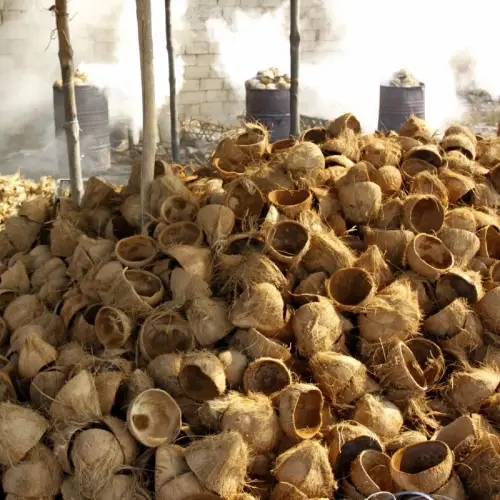
Coconut fiber has a variety of uses, from growing media and fuel to handicrafts. Coconut fiber can be processed into organic fertilizer, growing media (cocopeat), industrial raw materials such as mattresses and car seats, and various crafts like doormats and bags. The quality of coconut fiber can be determined by considering factors such as cleanliness, fiber fineness, strength.
Here are some of the benefits of coconut fiber in more detail:
1. Organic Fertilizer:
• Coconut fiber contains potassium and organic matter that are good for plant growth.
• It can be processed into liquid organic fertilizer by soaking the coconut fiber in water.
• This fertilizer can strengthen plant roots and stems and improve fruit quality.
• Each mature coconut has a fiber that is between 5-6 cm thick, consisting of an outer layer and an inner layer. One coconut produces approximately 0.4 kg of fiber, which contains 30 percent nutrient-rich fiber. The chemical composition of coconut fiber includes cellulose, lignin, pyroligous acid, gas, charcoal, tar, tannin, and potassium.
• Furthermore, coconut fiber also contains 10.25 percent potassium, making it an alternative source of organic potassium to replace synthetic KCl fertilizer. Elements such as Ca, Mg, K, Na, and P make coconut fiber ideal for use as organic fertilizer.
• How to make: Chop or cut the coconut fiber into small pieces, then place them in a container. Dissolve water, molasses, and EM4 or MA11. Mix until thoroughly combined and add to the container containing the coconut fiber pieces. Close the container tightly and open the lid every morning for a few seconds to release any gas that may form. Store the ingredients in a cool place and let them sit for two weeks. Once ready, filter the solution with a filter, and the POC solution is ready to use.moisture content, and fiber thickness and length.

2. Planting Media:
• Coconut fiber processed into cocopeat can be used as a planting medium to replace soil due to its water retention and good air circulation.
• Cocopeat is also rich in nutrients needed by plants.


3. Industry:
• Coconut fiber can be processed into coco fiber, which is used as a raw material for various products, such as mattresses, car seats, and rope.
• Coconut fiber can also be used as sound and heat insulation.


4. Handicrafts:
• Coconut fiber can be woven into various handicrafts, such as doormats, bags, and wallets.
• Finer coconut fibers can be used as stuffing for pillows and bolsters.


5. Fuel:
• Coconut fiber can be used as an alternative fuel to replace firewood.

6. Plant Disease Control:
• Coconut fiber processed into Trichoderma coconut fiber meal (TCPC) can be used to control plant diseases.